• Student View: From Ideas at MSU to a Future in Biotech at Brown

    April 27, 2026

    Student View: From Ideas at MSU to a Future in Biotech at Brown

    Shreshta Sinha is a graduating student at Michigan State University, earning a degree in neuroscience from the Lyman Briggs College. He has a strong interest in biotechnology, neuroscience and entrepreneurship. Shreshta was involved with the Burgess Institute and served as Financial Director of the MSU Entrepreneurship Association. This fall, he will attend Brown University to pursue a master’s degree in biotechnology.

    In 2023, a friend introduced me to the Discovery program at the Burgess Institute and that’s where things started to click. I was an 18-year-old sophomore with a lot of business ideas, but no real understanding of entrepreneurship or how to turn those ideas into something tangible. Burgess changed that for me. It gave me my first true exposure to the entrepreneurial process, along with the structure, guidance, and access to resources that helped me start building real skills and confidence.
    54441440444_df4b4e842a_o
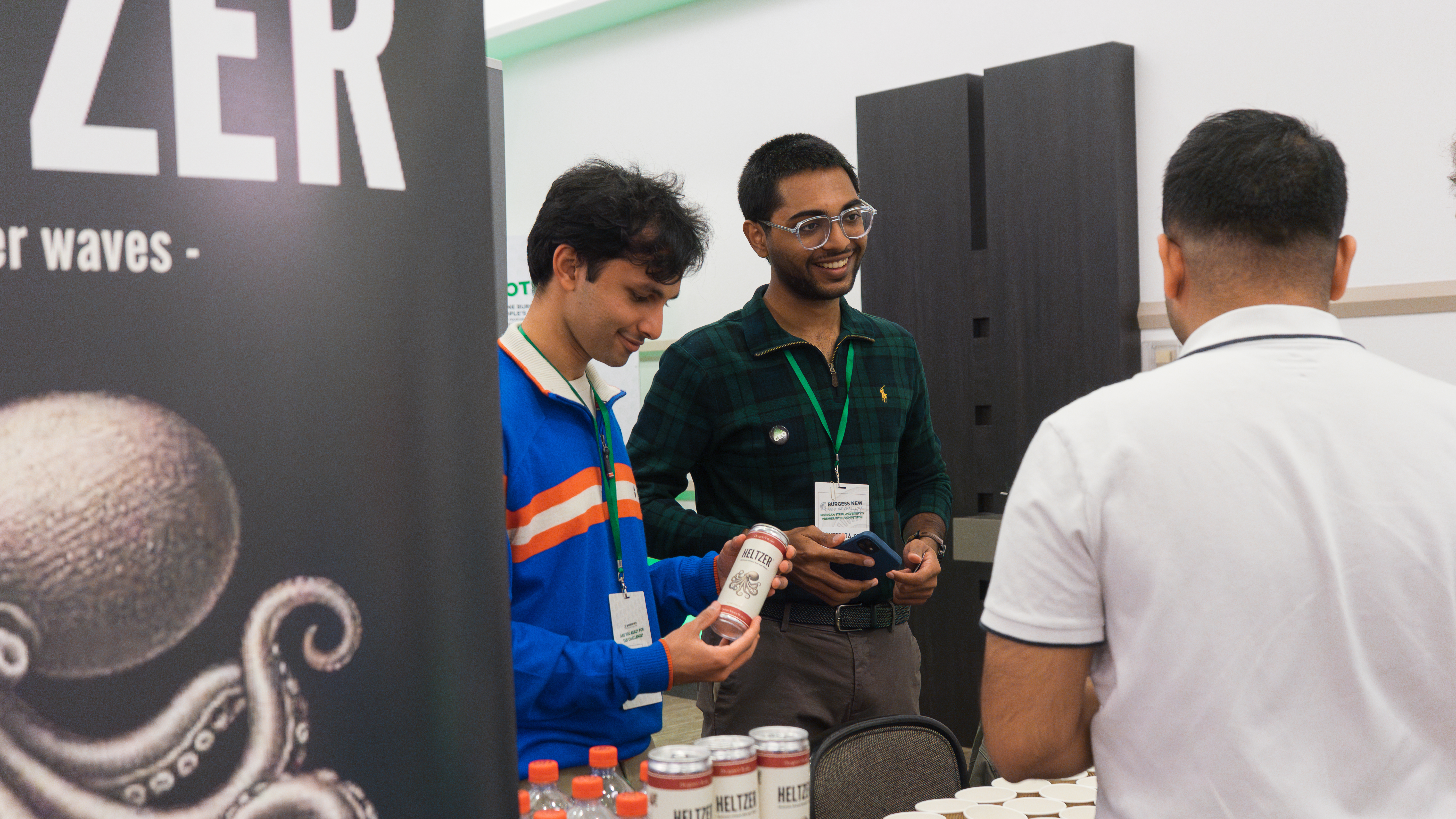
    Shreshta Sinha (center) showcases his startup, Heltzer, during the Student Showcase at the 2025 Burgess New Venture Challenge.

    One of the most meaningful parts of my experience was The Hatch, an incubator space. It wasn’t just a workspace to me, it became a 24/7 home for ideas. I spent countless days and late nights there thinking, building, and creating. When it closed last semester, it felt like the end of a really important chapter in my MSU journey, and it’s a place I’ll always look back on with gratitude.

    Through Burgess, I also became deeply involved in MSUEA, a student-run entrepreneurship organization. One of my favorite parts was attending the speaker series and learning directly from founders and leaders. Because mentorship has always felt central to entrepreneurship for me, I eventually applied for the E-Board and served as Financial Director for a year. That role gave me the chance to give back—mentoring younger students and watching them grow and succeed was one of the most rewarding parts of my college experience.
    d27fccdf-80e0-4054-abd7-128d6137c484
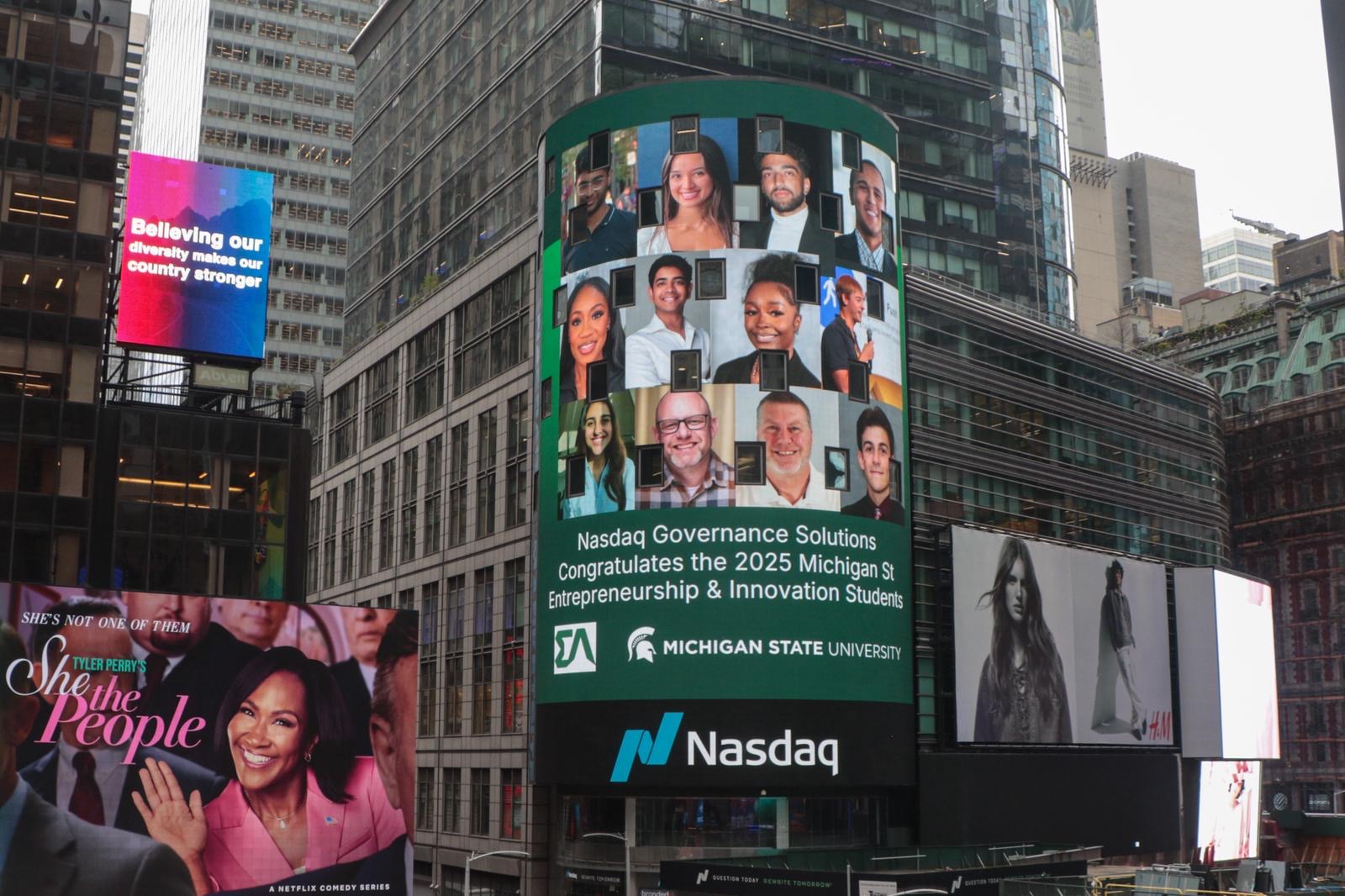
    Shreshta Sinha (top left) featured on the Nasdaq tower in Times Square during the MSU Entrepreneurship Association’s trip to Boston.

    Two experiences, in particular, really shaped how I see my future. In 2023, I traveled to San Francisco for Buildspace, where I met tech founders, learned about venture capital, and got my first real exposure to the world of bio-entrepreneurship. Then, on MSUEA’s annual Burgess-supported trip to Boston, I visited places like Harvard, Eli Lilly, Nasdaq, and MIT, and attended the McGovern Institute’s 25th anniversary celebration. Hearing conversations about the future of neuroscience, and seeing work at the MIT Media Lab, from brain-controlled bionic limbs to neural engineering, completely expanded what I thought was possible.

    What made Boston especially impactful was that it stopped feeling like just a city I admired from afar. It started to feel like a place where I could actually see myself building a future. Conversations with leaders like Dr. Nancy Kanwisher, combined with everything I saw at MIT, gave me both clarity and confidence. That experience helped me realize I want to work at the intersection of neuroscience, entrepreneurship, and emerging technology. It’s a big reason I hope to live and build in Boston one day.

    Next fall, I’ll be starting my master’s in Biotechnology at Brown University. I’m passionate about innovation and want to work on solving meaningful problems that improve society, especially in areas like neural stem cells, organoids, and brain-computer interfaces. The Burgess Institute played a huge role in preparing me for that path. It helped me develop both a professional mindset and the entrepreneurial confidence to trust my ideas and pursue them.

    If I could share one piece of advice with other entrepreneurial students, it would be this: start building. Don’t overthink it. Take action, learn as you go, and trust yourself. Stay open to feedback, but don’t let outside opinions stop you from believing in what you’re building.

    Finally, I want to thank Paul Jaques, the donors, staff, and interns at Burgess for the incredible impact they’ve had on my growth and career. I’m deeply grateful for everything this community has given me.
  • MSU Broad MBA Named a Big Bets Fellow by The Rockefeller Foundation

    April 27, 2026

    MSU Broad MBA Named a Big Bets Fellow by The Rockefeller Foundation

    By Katie Haley

    Nthanda Manduwi, an MBA student at Michigan State University’s Eli Broad College of Business, has been selected as a fellow in the prestigious Rockefeller Foundation Big Bets Fellowship, a global leadership program designed to support emerging changemakers tackling some of the world’s most pressing challenges.

    Selected from a highly competitive pool of more than 2,000 applicants, Manduwi is one of just 10 fellows chosen for the program’s inaugural Africa cohort.

    The five-month fellowship brings together a diverse cohort of leaders who are advancing bold solutions to expand opportunities and strengthen communities around the world. Through leadership development programming, global convenings, and a residency at Lake Como in Italy, fellows engage in collaborative learning designed to accelerate the impact of their work. Each fellow also receives a ,000 stipend and access to a network of partners and funders to help scale solutions across the African continent and beyond.

    “Being part of the Big Bets Fellowship is meaningful to me because it affirms the tension I’ve been navigating in my work: the trade-off between solving specific, immediate pain points and stepping back to build at the level of systems”, shared Manduwi.

    Manduwi, an entrepreneur and advocate for innovation and youth empowerment, has built a career at the intersection of entrepreneurship, digital transformation, and education. Her work focuses on expanding access to opportunities for young people and supporting creative and entrepreneurial ecosystems, particularly across Africa.

    As part of the fellowship, Manduwi will join a global network of leaders working to drive systemic change, gaining both the resources and relationships needed to scale solutions with lasting impact.

    Being a part of the inaugural Africa fellowship gives me the confidence to continue making long-term bets through Q2, particularly in areas like food systems and cyber-physical infrastructure, where the work is less defined but the potential impact – what we can do for humanity here, is far greater,” said Manduwi. “I am grateful Michigan State University gave me space to dream big, and I am privileged that platforms like Big Bets champion the same.”

    The Big Bets Fellowship equips leaders with the tools, networks, and support needed to transform ambitious ideas into meaningful, scalable impact, connecting vision with the people and resources required to bring it to life.

  • Michigan State Student Startups Selected to Compete at e-Fest® National Competition

    April 20, 2026

    Michigan State Student Startups Selected to Compete at e-Fest® National Competition

    By Katie Haley

    Two student-led ventures from Michigan State University, Cocomar and Biomex, have been selected to compete at the prestigious e-Fest® National Entrepreneurship Competition, taking place April 23–25, 2026.

    Hosted annually, e-Fest® brings together top collegiate entrepreneurs from across the country to pitch innovative, high-impact ventures in front of seasoned entrepreneurs, investors, and business leaders. Selection to compete is highly competitive, placing MSU’s teams among the nation’s most promising student founders.

    Biomex, founded by Tanvi Gadamsetti (’26), is a health-tech startup pioneering advanced biocompatible mesh fabrics engineered for open wounds and surgical applications. By rethinking how materials interact with the human body, Biomex aims to improve healing outcomes and advance the future of patient care.

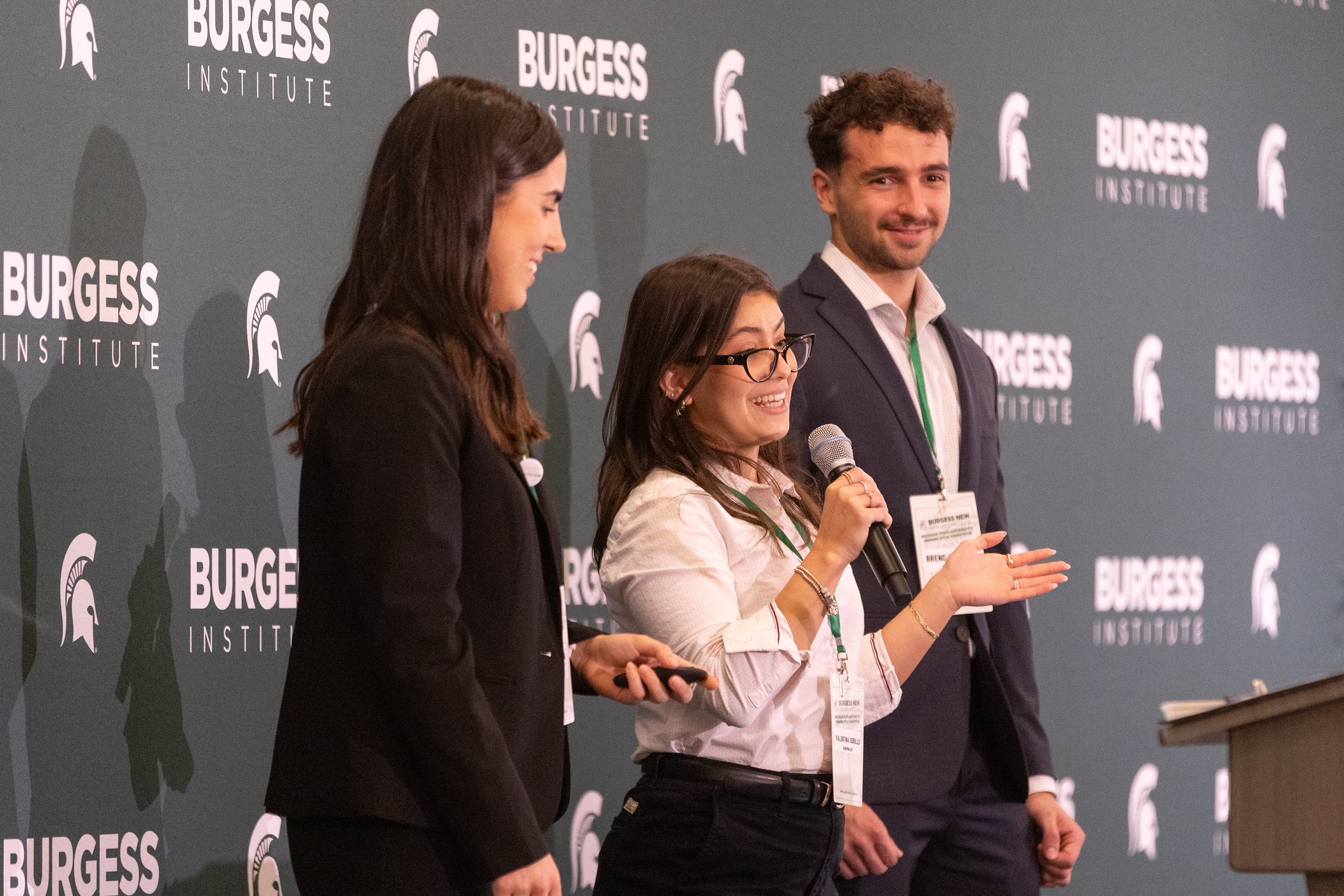
    Cocomar, founded by Fatima Taha (’26), Valentina Sgrillo (’26) and Breno Tepedino (’25), is a coconut water-based protein drink designed to deliver clean, functional nutrition. By combining hydration with plant-based protein, Cocomar offers a refreshing alternative to traditional protein beverages, meeting the growing demand for better-for-you performance drinks.

    Cocomar and Biomex represent the strength and diversity of Michigan State’s entrepreneurial ecosystem, each tackling real-world challenges with bold, scalable solutions. From sustainability-focused innovation to cutting-edge advancements in health and technology, both teams embody the next generation of Spartan entrepreneurs.

    Both ventures have been supported through the Burgess Institute for Entrepreneurship & Innovation, which provides student founders with the resources, mentorship, and experiential learning opportunities needed to bring ideas to life.

    As they head into competition, Cocomar and Biomex will pitch their ventures, receive feedback from industry experts, and compete for significant prize funding—all while representing Michigan State on a national stage.

  • Two Michigan State University teams compete in University of Georgia Next Top Entrepreneur Competition

    April 15, 2026

    Two Michigan State University teams compete in University of Georgia Next Top Entrepreneur Competition

    By Jessica Grover, student writer

    Two Spartan-founded ventures, BRCĒ and Memory Sketch, will represent Michigan State University at the 2026 University of Georgia Next Top Entrepreneur Competition.
    Composed of a mix of current students, alumni, and MBA candidates, both teams will pitch their startups to a panel of judges and compete for a ,000 cash prize.

    Memory Sketch, a software tracking the progression of Alzheimer’s Disease through drawings, is co-founded by Angela Leach (MBA ‘27), Griffin Reis (‘25), Caraline Kitchen (‘25), and Jackson Simkins (‘27).

    BRCĒ team, a performance materials technology company is co-founded Tanvi Gadamsetti (‘26) and Madhav Aggarwal (‘26).

    The UGA Next Top Entrepreneur Competition brings together top student entrepreneurs from across the country, providing a space to refine business ideas or existing businesses, connect with industry leaders, and gain valuable public exposure. Through a live pitch presentation, participants will demonstrate their business model, the validity of their idea, and their ability to execute it. The judges will be looking for the business with the greatest potential for success.

    As the competition approaches, both teams will continue to prepare their ventures to represent the Burgess Institute and Michigan State University on a national stage.

    About the Burgess Institute for Entrepreneurship & Innovation
    The Burgess Institute for Entrepreneurship & Innovation is the destination where students launch high-impact, entrepreneurial journeys at Michigan State University. The Burgess Institute empowers students to learn through action by providing global mentors, courses, seed funding, entrepreneurship competitions, student organizations, resources, and campus-wide co-working spaces.

  • Scaling a Startup Through the MSU MBA: My Journey with Memory Sketch

    April 14, 2026

    Scaling a Startup Through the MSU MBA: My Journey with Memory Sketch

    By Angela Leach, MBA Class of 2027

    Entrepreneurship has been the defining lens through which I have experienced my MBA at Michigan State University’s Broad College of Business. Rather than existing alongside my coursework, my startup has been strengthened and accelerated by it. The MBA has provided the strategic, financial, and operational foundation that allowed me to build and scale Memory Sketch with discipline and intention.

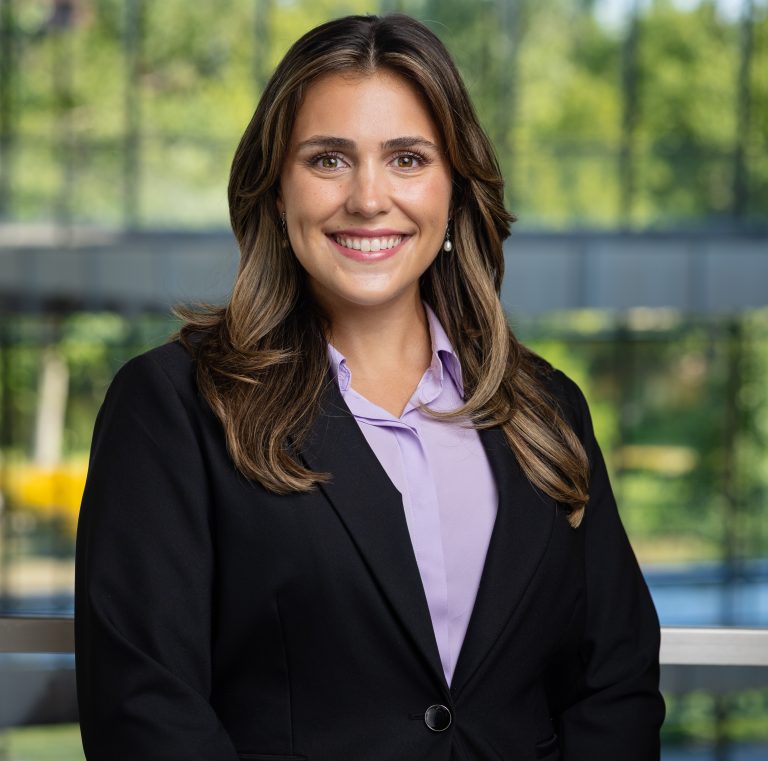
    081825_MSU-MBA-HEADSHOTS_ANGELA-LEACH4-768x761
    Angela Leach, MBA ’27

    Memory Sketch was founded in October 2024 during 2 Day Venture (2DV), a 36-hour pitch competition hosted by the Burgess Institute for Entrepreneurship & Innovation at Michigan State University. What began as a deeply personal idea of reimagining how Alzheimer’s progression could be tracked through patient drawings, quickly became a structured venture thanks to the frameworks I was learning in class. Courses in strategy, accounting, and supply chain management directly informed how I approached market sizing, unit economics, regulatory considerations, and long-term scalability.

    Following 2DV, I led our transition into the Venture Creation and Launch Programs, where I applied customer discovery methodologies and hypothesis testing frameworks reinforced in my MBA curriculum. In April 2025, Memory Sketch was named a semifinalist in the Burgess New Venture Challenge, earning both the Unique Idea Award and the People’s Choice Award. Preparing for that stage required translating clinical and technical complexity into a clear value proposition—an ability sharpened through case discussions, presentations, and executive-style communication within the MBA.

    The summer of 2025 marked a shift from ideation to execution. While refining our go-to-market strategy and overseeing backend software development, I also worked as a Venture Creation Intern with the Burgess Institute, helping optimize venture milestone systems used by student founders. That operational exposure complemented my coursework in process improvement and systems thinking, strengthening how I build internal structure within Memory Sketch.

    Engagement with external stakeholders further reflected the MBA’s impact. Conversations with neurologists at Mayo Clinic shaped our product roadmap and reinforced the importance of evidence-based innovation. Representing MSU at University Pitch Madness required not only confidence in our technology, but also fluency in financial modeling, risk mitigation, and stakeholder alignment; all of which are skills that were cultivated in the classroom.

    As Memory Sketch advanced beyond MVP and into beta testing through acceptance into the Capital Area Startup Studio, I increasingly relied on cross-functional thinking developed through my MBA. Evaluating pricing strategy, partnership models, and operational scalability required integrating finance, marketing, and supply chain perspectives rather than viewing entrepreneurship as a siloed activity.

    This integration will continue this summer as I join Regeneron Pharmaceuticals as a Supply Chain Intern, where I will translate dynamic demand requirements into advanced planning systems within a regulated biopharmaceutical environment. The same entrepreneurial mindset including problem framing, ambiguity navigation, and value creation under constraints, will guide that work.

    Beyond my venture, serving as President of the Entrepreneurship Association and as a Graduate Assistant for both the Burgess Institute and the MBA Program has allowed me to reinforce and apply what I am learning. Facilitating workshops, moderating pitch sessions, and supporting founders with financial projections have deepened my mastery of MBA concepts by teaching them to others.

    Ultimately, my MBA has not simply supported my entrepreneurial work, it has professionalized it. It has transformed Memory Sketch from an inspired idea into a strategically grounded, operationally disciplined health-tech venture, while equipping me with a transferable skillset that applies to both early-stage startups to global healthcare operations.

    This story originally appeared on the Eli Broad College of Business website.

  • Material-tech startup BRCĒ from Michigan State takes home grand prize at Rice Business Plan Competition

    April 14, 2026

    Material-tech startup BRCĒ from Michigan State takes home grand prize at Rice Business Plan Competition

    Avery Ruxer Franklin – RICE News

    More than .4M in prizes announced to all competitors

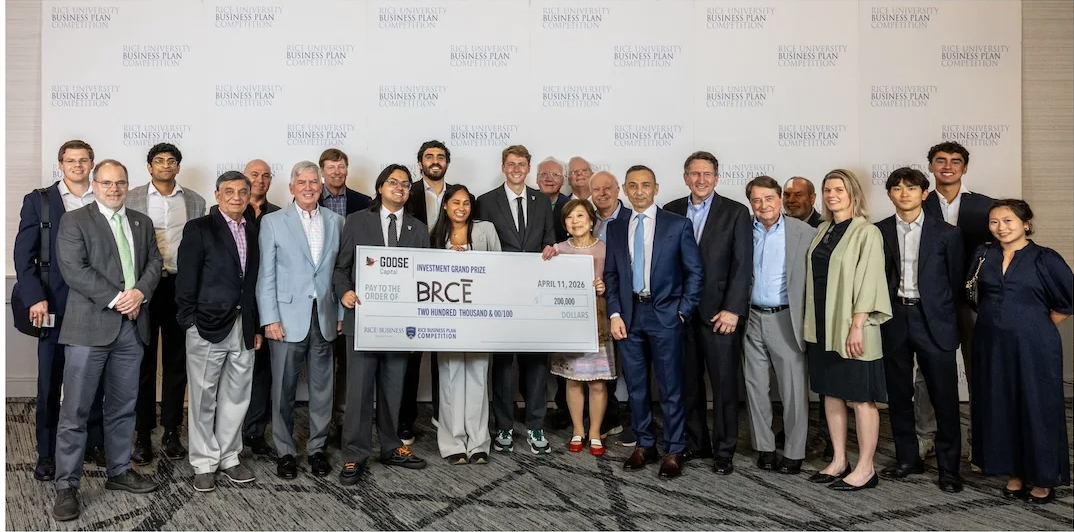
    BRCĒ is a material-tech startup replacing failure-prone textiles with polymer composites engineered for strength, fire resistance and intrinsic stability. Its patented Lattice-Grip technology enables directional grip and controlled tension at the yarn level, eliminating slippage and performance loss under extreme conditions. The recent “Shark Tank” participant won over judges during the Rice Business Plan Competition (RBPC) and walked away with 11 prizes totaling 1,500.

    In his winning remarks, BRCĒ’s co-founder and CEO Madhav Aggarwal credited watching a fellow Michigan State University alum win the 2024 RBPC as the spark for his own entrepreneurial journey. After seeing that, the team began competing in smaller competitions to sharpen their pitch and build momentum with the goal of ultimately making it to the “Super Bowl of Student Entrepreneurship” at Rice.

    This year’s RBPC saw 42 startups compete for more than .3 million in investment and nondilutive cash prizes and an additional 0,000 in in-kind value April 9-11 at Rice University and in Houston’s Ion District. The RBPC is the world’s largest and richest intercollegiate graduate student startup competition, hosted annually by the Rice Alliance for Technology and Entrepreneurship and presented by Rice Business. The event serves as a global stage for emerging ventures from leading universities — this year’s invited startups represented 39 universities from four countries.

    The 26th annual competition brought together more than 300 angel investors, venture capitalists, corporate leaders and entrepreneurial ecosystem partners, creating an unmatched environment for investment, mentorship and connection. Teams pitched their cutting-edge solutions in categories, including energy, cleantech and sustainability; life sciences and health care; hard tech; digital enterprise; and consumer products. Read more about the competing startups.

    “The Rice Business Plan Competition has grown into far more than a competition — it’s a proving ground for founders and a catalyst for real company formation, as well as a catalyst for building the Houston entrepreneurial ecosystem,” said Brad Burke, associate vice president of Rice Innovation and executive director of Rice Alliance. The 2026 competition marks Burke’s final RBPC, capping nearly 25 years of leadership and impact on the global startup ecosystem.

    “The level of talent and ambition we see each year continues to raise the bar,” said Catherine Santamaria, director of the RBPC. “What makes RBPC truly special is the depth of engagement from our judges and partners, who provide meaningful feedback and connections that help founders move their companies forward.”

    The student entrepreneurs gain real-world experience pitching their startups, enhancing their business strategy and learning what it takes to launch and scale successfully. The competition always includes an elevator pitch competition, practice round, semifinals and wildcard and final rounds. Between pitches, RBPC teams enjoyed networking and mentorship opportunities, gaining applicable knowledge for their startups. In addition to competing for investments, cash and in-kind prizes, these graduate students gain invaluable advice from investors on how to secure funding, raise awareness and launch a successful venture. To learn more about the 2026 RBPC, visit rbpc.rice.edu.

    Based on the judges’ overall scores, the seven finalists were:

    • BRCĒ, Michigan State University — first place and the 0,000 Goose Capital Investment Grand Prize with a total of 1,500 in prizes.
    • Legion Platforms, Arizona State University — second place and the 0,000 Investment Prize sponsored by Jon Finger, Finger Interests; David Anderson, the Anderson Family Fund at the Greater Houston Community Foundation; and Nancy Chang, with a total of 5,500 in prizes.
      • Legion Platforms is building accessible 3D online games designed to run seamlessly on low-powered devices and slow internet connections. Powered by its proprietary game engine, users can instantly access games via browser or mobile without downloads.
    • Imagine Devices, University of Texas at Austin — third place and the ,000 Investment Prize sponsored by Jon Finger, Finger Interests; David Anderson, the Anderson Family Fund at the Greater Houston Community Foundation; and Nancy Chang, with a total of 1,000 in prizes.
      • Imagine Devices is developing Trinity Tube, a multifunctional nasogastric feeding tube. By consolidating multiple devices into a single integrated solution, Trinity Tube enhances respiratory monitoring, reduces device burden and supports safer, more efficient care for premature infants in the NICU.
    • Altaris MedTech, University of Arkansas — fourth place and the ,000 cash prize sponsored by Norton Rose Fulbright with a total of ,000 in prizes.
      • Altaris MedTech is improving pediatric diagnostics. The first product, Strep-Detect, replaces traditional throat swabs with a spray-based method that causes infections to fluoresce under blue light.
    • Routora, University of Notre Dame and University of Texas at Austin — fifth place and the ,000 cash prize sponsored by Chevron Technology Ventures with a total of ,500 in prizes.
      • Routora is an AI-powered platform transforming how cities and small businesses manage inspection operations. Its software automates scheduling, assignment and route optimization, replacing inefficient manual planning tools.
    • DialySafe, Rice University — sixth place and the ,000 cash prize sponsored by ExxonMobil with a total of ,500 in prizes.
      • DialySafe is an AI-powered remote patient monitoring platform designed to detect peritonitis in home dialysis patients earlier and more accurately. Its proprietary magnetic induction spectroscopy sensor clips onto existing tubing to identify infection biomarkers without fluid contact.
    • Arrow Analytics, Texas A&M University — seventh place and the ,000 cash prize sponsored by Shell Ventures with a total of ,000 in prizes.
      • Arrow Analytics is improving air travel efficiency with an autonomous baggage tracking, counting and sizing platform. Using depth cameras and spatial AI at airport gates, the system helps airlines reduce boarding delays, optimize cabin storage and enhance the passenger experience.

    Additional significant prizes and the winning teams are:

    • 0,000 Goose Capital Investment Prize — Legion Platforms, Arizona State University
    • 0,000 The OWL Investment Prize — BRCĒ, Michigan State University
    • 0,000 The OWL Investment Prize — Legion Platforms, Arizona State University
    • 0,000 Houston Angel Network Investment Prize — BRCĒ, Michigan State University
    • 0,000 The Indus Entrepreneurs (TiE) Texas Angels Investment Prize — Legion Platforms, Arizona State University
    • ,000 The Indus Entrepreneurs (TiE) Texas Angels Investment Prize — BRCĒ, Michigan State University
    • ,000 nCourage Investment Network’s Courageous Women Entrepreneur Investment Prize — BRCĒ, Michigan State University
    • ,000 New Climate Ventures Sustainable Investment Prize — BRCĒ, Michigan State University
    • ,000 Pearland EDC Spirit of Entrepreneurship Cash Prize — Imagine Devices, University of Texas at Austin
    • ,000 Pearland EDC Spirit of Entrepreneurship Cash Prize — Legion Platforms, Arizona State University
      ,000 Southwest National Pediatric Device Consortium Pediatric Device Cash Prize — BiliRoo, University of Michigan
    • ,000 Amentum and WRX Companies Rising Stars Space Technology and Commercial Aerospace Cash Prize — BeamFeed, City University of New York
      ,000 The Eagle Investors Investment Prize — Imagine Devices, University of Texas at Austin
    • ,000 non sibi ventures RAVA Accelerator — Salem Robotics, University of Texas at Austin
    • ,000 Aramco Innovator Cash Prize — BRCĒ, Michigan State University
    • ,000 Aramco Innovator Cash Prize — Grapheon, University of Pittsburgh
      TMC Innovation Healthcare Accelerator Bootcamp Invitation Prize — NerView Surgical, McMaster University

    A total of ,000 in in-kind legal services were awarded to all finalists with the Baker Botts Prize. The grand prize winner receives a chief financial officer consulting prize worth ,000. The full list of winners and prizes can be found at rbpc.rice.edu.

    This content originally appeared on news.rice.edu

  • Student View: Creating Entrepreneurship Experiences at MSU

    April 13, 2026

    Student View: Creating Entrepreneurship Experiences at MSU

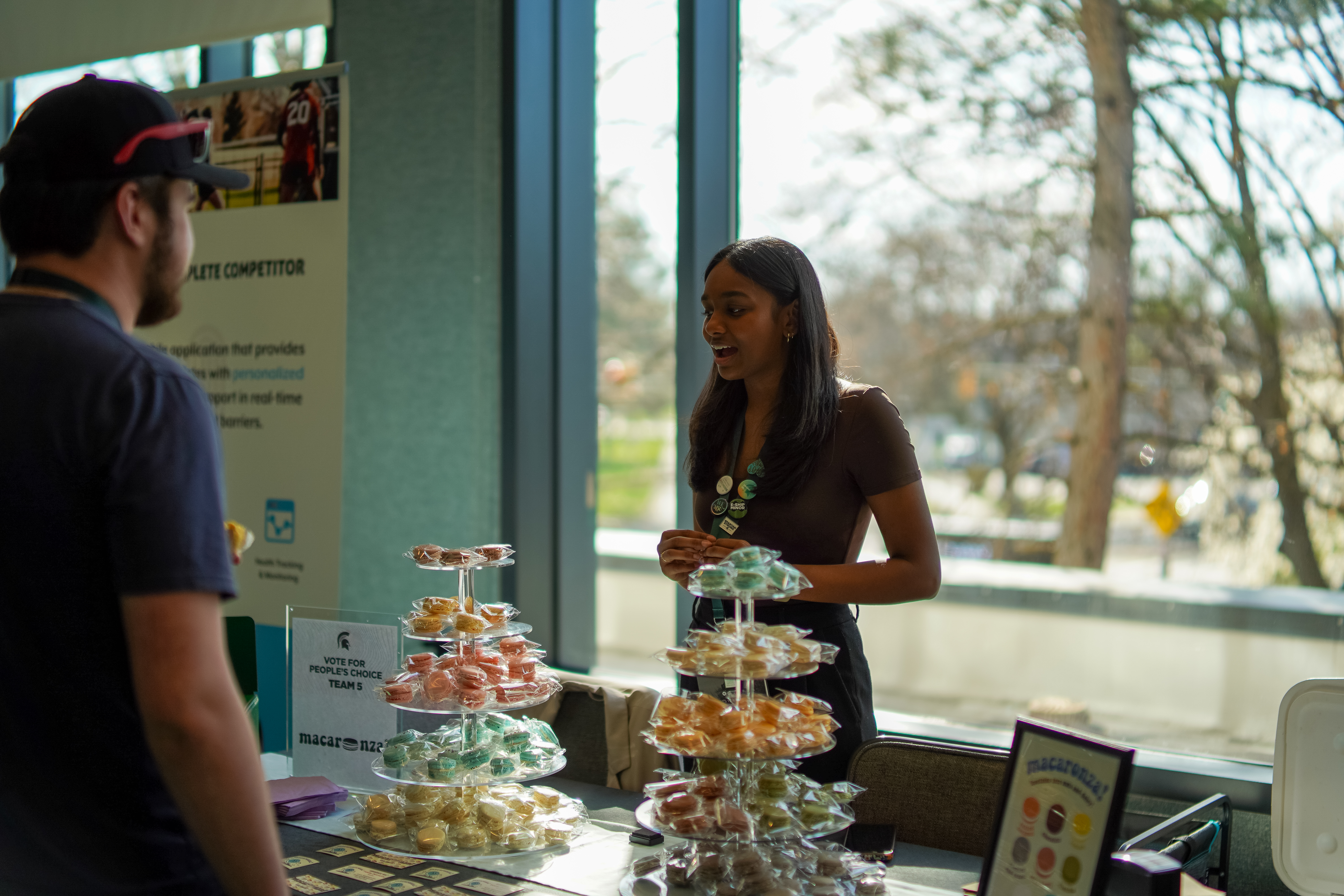
    Yuktha Pulavarthi is a senior in the Eli Broad College of Business, where she is studying marketing with a minor in Entrepreneurship and Innovation. She has served as president of MSU Women in Entrepreneurship and as Campus Manager for Student-Made Michigan State. She is also a scholar in the Dashney Women’s Leadership Accelerator (DWLA). Pulavarthi is the founder of macaronza!, a small-batch homemade macaron business.

    I first got involved with the Burgess Institute through MSU Women in Entrepreneurship during my freshman year, while I was also enrolled in the entrepreneurship minor. Through the organization, I pitched at the WE annual fall pitch competition, which is where I met Lori Fischer. Lori played a key role in helping me get started in the Venture Kitchen. When the senior intern in that role graduated, I applied and stepped into the position during the spring semester of my freshman year.

    20250616_222223_9A328C
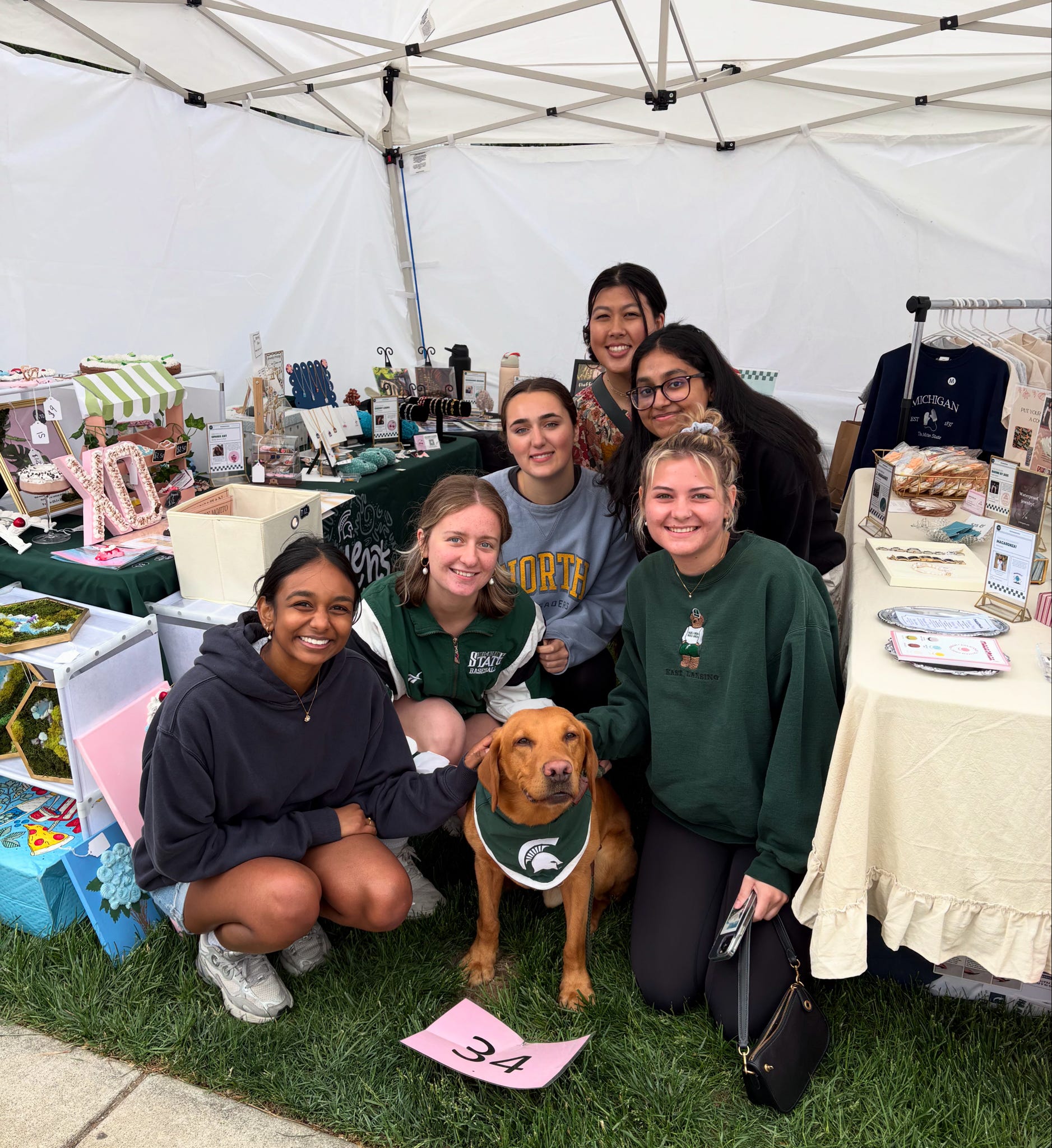
    Members of Student-Made Michigan State at a pop-up event.

    Around the same time, Lori connected with Student-Made founder Lindsay Reeth about bringing Student-Made to MSU. Because I was already working in the Venture Kitchen managing a pop-up space in the Union, Student-Made felt like a natural next step and an exciting way to expand pop-up programming on campus. I joined as the Events and Partnership Manager for Student-Made, where I hosted more than 20 pop-ups and helped build out MSU marketplaces. What started with just two markets at 1855 Place and the Kellogg Hotel has now grown to six locations across campus.

    Some of my favorite experiences through the Institute have come from the people I’ve met along the way. One standout moment was being invited to a Lunch & Learn with Ariana Ferwerda, founder of Halfdays. I went in not knowing much about her work, and I left completely inspired—she’s now one of my favorite entrepreneurs to follow. I also had the chance to meet Alexa Ryan, founder of Bakr, and it’s been incredible to watch her brand grow and thrive in the dessert industry.

    I can confidently say that getting involved with the Burgess Institute has been the most impactful part of my college experience. It has shaped my growth through building my own business, connecting with founders, and saying yes to opportunities that I never would have experienced otherwise. Those conversations and events truly changed the trajectory of my career.

    Two moments that really pushed me outside of my comfort zone were the WE pitch competition and the Burgess New Venture Challenge. Both experiences challenged me in the best way and taught me more than I expected. Placing third in the WE pitch competition was the first time I truly felt like my small passion project could become something real.

    55068206862_51ec16288a_o
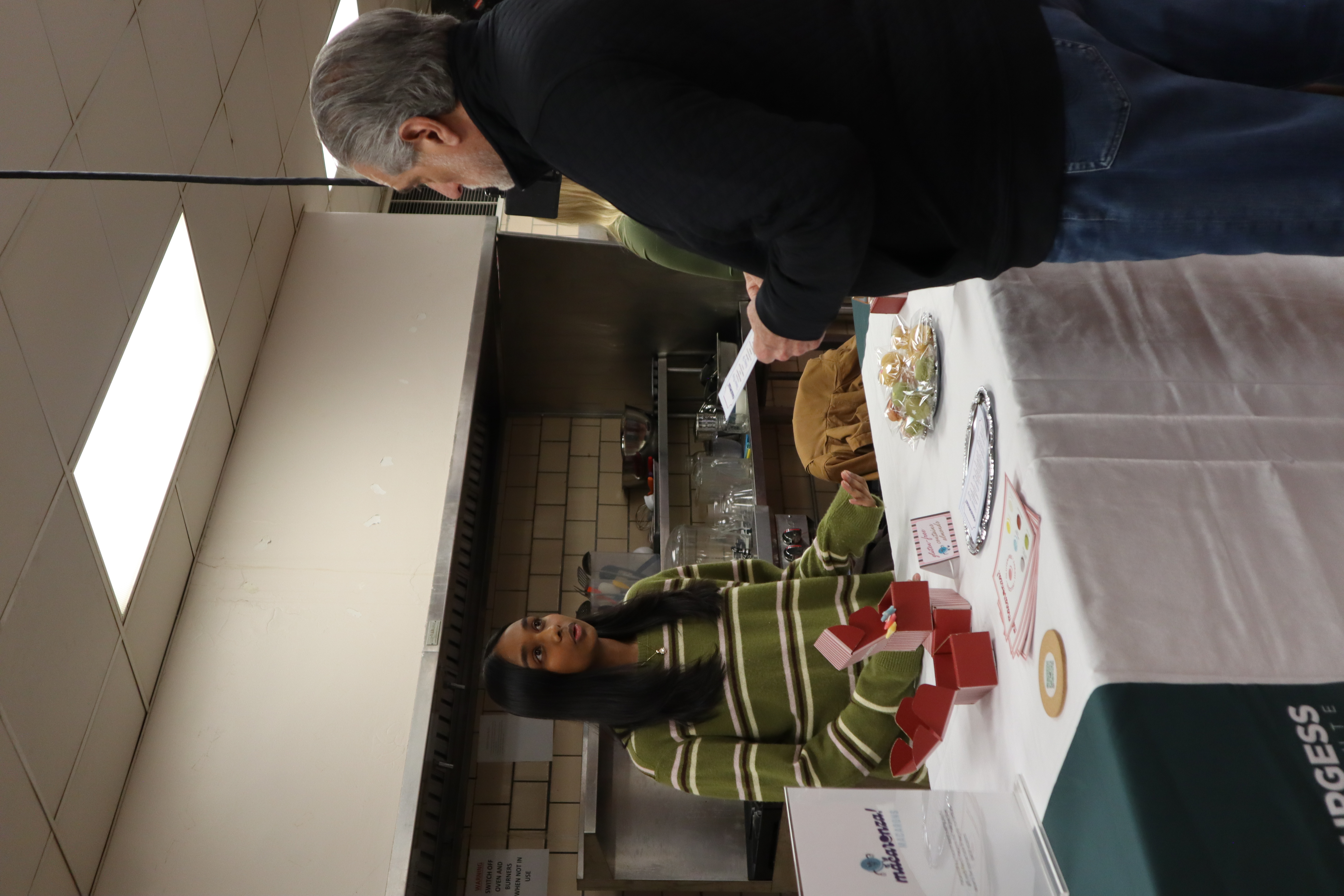
    Pulavarthi sharing macaronza! with alum Joe Germanotta.

    After graduation, I plan to move to New York City to work as a Marketing Coordinator for a hybrid VC firm and marketing agency that partners with CPG brands I admire. I’m especially excited to continue learning in the startup CPG space. During my interview, my experience growing macaronza stood out as a major talking point—it showed my passion for the industry and helped me stand out as a candidate. The company, Good Peeps, is a startup itself, and my time with Burgess and Student-Made helped me feel confident stepping into that kind of environment.

    My advice to other entrepreneurial students is simple: if you’re thinking about starting a business, now is the time. You don’t have to commit forever, but taking that first step is the hardest part. So few ideas actually get acted on, and you never know where it might lead or what you’ll learn from the process.

    Looking back, I came into MSU as someone who wasn’t very involved in high school, but I made a commitment to say yes to opportunities here. That decision shaped my entire college experience. I’m incredibly proud of everything I’ve been able to accomplish, and I know my support system at MSU will always be just a call, text, or email away no matter where my career takes me.

  • MSU’s Premier Pitch Competition Awards Spartan Entrepreneurs

    April 10, 2026

    MSU’s Premier Pitch Competition Awards Spartan Entrepreneurs

    By Katie Haley

    Fifteen student startups took the stage on April 9 for Michigan State University’s premier pitch competition, Burgess New Venture Challenge.

    These Spartan entrepreneurs pitched their ventures before an audience of more than 400 students, alumni, investors, and community leaders, competing for ,000 in non-dilutive grant funding.

    Hosted by the Burgess Institute for Entrepreneurship & Innovation, the Challenge unites undergraduate and graduate founders to refine their ideas, test their business models, and gain real-world experience on stage.

    “The Burgess New Venture Challenge is more than a pitch competition, it’s a launchpad for Spartan entrepreneurs,” said Laurel Ofstein, senior director of the Burgess Institute. “Our students are building real ventures and solving real problems. Watching these founders take the stage and share their ideas with the community is one of the most exciting moments of the year.”

    In the months leading up to the competition, semifinalist teams worked closely with a network of Spartan alumni and industry leaders serving as Venture Coaches who provided mentorship, feedback, and strategic guidance to help founders refine their ventures.

    Held at the Marriott East Lansing at University Place, the evening celebrated the growing momentum of entrepreneurship at MSU and across the Lansing region. This year’s Burgess New Venture Challenge took place during 517 Entrepreneurship & Innovation Week, a community-wide celebration of innovation and entrepreneurship organized in partnership with LEAP, Lansing Regional SmartZone, MSU Research Foundation, and the MSU Innovation Center.

    The event featured private pitches with a panel of judges offering an external perspective to evaluate each venture recognizing innovation, execution and potential. A semifinalist showcase created space for students, founders, and supporters to connect, followed by live finalist pitches and awards. The competition brought together ventures spanning multiple industries and stages, representing six academic colleges at MSU.

    Winners were selected for first through fifth place, along with Social Impact and People’s Choice awards made possible through the support of our sponsors.

    1st place (,000) presented by MSUFCU
    Nanners
    Evan Hackstock, Eli Broad College of Business
    Protein Banana Bread Bites

    2nd place (,000) presented by Foster Swift
    Memory Sketch
    Angela Leach, Eli Broad College of Business, Jackson Simkins, Eli Broad College of Business, Griffin Reis (B.A. ‘25) Caraline Kitchen (B.A. ’25)
    We are revolutionizing how we track the progression of Alzheimer’s Disease through patient drawings.

    3rd place (,500) presented by Lansing Economic Area Partnership (LEAP) and Lansing Regional SmartZone
    Ekos
    Kyli Corder, College of Communication Arts & Sciences
    Ekos is a smart mirror-powered salon operating system that turns every appointment into data, automates operations, and helps independent stylists and salons grow revenue through AI-driven insights.

    4th place (,000) presented by MSUFCU
    MindMosaic
    Dan Sagher, College of Natural Science
    MindMosaic is a visual workspace that helps users think, plan, and create by organizing multimodal projects around their core concepts.

    5th place (,500) presented by Detroit Venture Partners, General Motors and MSU Women in Entrepreneurship
    Sapt
    Benjamin Meyer, College of Engineering, Uzair Mohammed, College of Engineering
    Sapt builds custom AI-powered business operating systems that automate marketing, SEO, and content management for SMBs.

    Social Impact Award (,500) presented by the Center for Ethical and Socially Responsible Leadership
    DryX
    Kaniz Fatema Promee, College of Engineering
    DryX provides a compact, energy-efficient dish-drying system for small-to-mid-scale commercial kitchens, cutting drying time from hours to minutes while reducing labor, space, and energy waste.

    People’s Choice Award (,000) presented by Fenner Melstrom & Dooling
    Single Scoop Vending
    David Lalaj, Eli Broad College of Business, David Heyn, Eli Broad College of Business
    Single Scoop is a smart vending machine for gyms that delivers perfectly mixed, single-serve pre-workout and protein powder from trusted brands, giving members convenience, variety, and confidence in what they consume.

    The Burgess New Venture Challenge continues to serve as a platform for student founders to share ideas, receive feedback, and take early steps toward building scalable ventures. The event reflects the continued growth of entrepreneurship at Michigan State University and across the Lansing region.

    More information about 517 Entrepreneurship & Innovation Week is available via LEAP and the Lansing Regional SmartZone.

    More information about Burgess New Venture Challenge and the 2026 Semifinalist teams are available via the Burgess Institute for Entrepreneurship & Innovation.

  • Applications Now Open for MSU’s 2026 Entrepreneur Leadership Camp for High School Students

    Feb. 4, 2026

    Applications Now Open for MSU’s 2026 Entrepreneur Leadership Camp for High School Students

    By Katie Haley

    This summer, Michigan State University will once again welcome ambitious high school students from across the state to campus for the High School Entrepreneur Leadership Camp, a four-day immersive experience designed to introduce the next generation of founders to the power of entrepreneurship.

    Hosted by the Burgess Institute for Entrepreneurship & Innovation and Multicultural Business Programs (MBP), the Entrepreneur Leadership Camp will take place June 22-25 at the Eli Broad College Business. Open to all rising high school juniors and seniors, the Entrepreneur Leadership Camp invites students from across Michigan to explore entrepreneurship as a pathway for leadership, innovation, and impact. Through hands-on workshops, team-based problem solving and direct engagement with entrepreneurs and business leaders, students gain real-world skills while building confidence and community.

    “Early exposure to entrepreneurship empowers students to see themselves as problem-solvers and leaders, giving them the confidence and tools to make an impact,” said Lori Fischer, director of operations at the Burgess Institute.

    Founded in 2022, the camp transforms MSU’s Entrepreneurship Lab into a high energy launchpad where students work in teams, learn to collaborate effectively, and engage with experienced entrepreneurs within Michigan’s entrepreneurial ecosystem. From Grand Rapids to Detroit and communities in between, students arrive not just as visitors, but as emerging innovators ready to embrace an entrepreneurial mindset.

    “What makes this camp is special are the many relationships that students have been able to forge with one another, which has helped to spark lasting friendships that have carried on beyond the length the program. Seeing how former camp participants have emerged as student leaders on MSU’s campus has also been a sight to behold considering that we were first introduced to them as high school students,” said Marquis Taylor, assistant director for strategic partnerships, alumni, and employer relations at MBP.

    A key pillar of the program is the continued support of Tamira Chapman, MSU alumna, Detroit native, nationally recognized entrepreneur and premier event sponsor. Through the Chapman Family Foundation, Chapman invests in the next generation of Michigan entrepreneurs by providing financial support, mentorship and lived experience.

    Through the four-day experience, students participate in workshops led by accomplished business leaders and industry professionals, gaining exposure to entrepreneurship, leadership development, and Michigan’s broader innovation ecosystem.

    Applications for the 2026 Entrepreneur Leadership Camp are now open.

    For more information and to apply, visit: https://msu.co1.qualtrics.com/jfe/form/SV_d1fBpajJzTdUTOK

    About the Burgess Institute for Entrepreneurship & Innovation: The Burgess Institute for Entrepreneurship & Innovation is the destination where students launch high-impact, entrepreneurial journeys at Michigan State University. The Burgess Institute empowers students to learn through action by providing global mentors, courses, seed funding, entrepreneurship competitions, student organizations, resources, and campus-wide co-working spaces.

  • Student-Led Ventures Put Michigan’s Entrepreneurial Ecosystem on the Global Stage

    Jan. 21, 2026

    Student-Led Ventures Put Michigan’s Entrepreneurial Ecosystem on the Global Stage

    Two Michigan State University student-led ventures, BRCĒ and CocoMar, earned top honors at the internationally recognized Queen’s Entrepreneurs’ Competition, reinforcing strength of the region’s entrepreneurial ecosystem and the growing national and global impact of MSU founders.

    BRCĒ, a material-tech startup that is developing an ecosystem of athletic performance gear and safety accessories to support athletes in performance and recovery captured first place, and ,000. While CocoMar, a premium ready-to-drink protein smoothie brand that blends real fruits with coconut water secured third place and a ,000 award. The QEC draws top student-led ventures from around the world, making the achievement of two regional teams placing especially notable.

    “This is the kind of story you love to hear, said Jillian Winn, director of the Lansing Regional SmartZone. Two student-led companies from the Lansing region placing in the top 15 and being invited to the Queen’s Entrepreneurs’ Competition is impressive on its own.

    These student teams are shining examples of how taking full advantage of the ecosystem can accelerate business growth. The founders are the ones putting in the hard work—staying dedicated and never giving up—but they are not alone. As MSU students, they’ve worked with the MSU Burgess Institute and Michigan State University, and they’ve also received support from, the Lansing Regional SmartZone, the Lansing Economic Area Partnership (LEAP), the MSU Research Foundation, and other regional partners. We work together to support these entrepreneurs, so they are prepared to not just show up, but stand out.

    Both companies have been supported by the Burgess Institute for Entrepreneurship & Innovation, which provides students with education, mentorship, funding opportunities, and a community designed to help founders turn ideas into scalable ventures.

    “BRCĒ and CocoMar are strong examples of how a coordinated ecosystem can elevate student founders,” said Laurel Ofstein, senior director of the Burgess Institute for Entrepreneurship & Innovation. “Burgess provides the foundation—early education, mentorship, and a sense of belonging—so students are ready to take advantage of opportunities across the region”

    BRCE and CocoMar also alumni of the Conquer Accelerator program through the MSU Research Foundation, gaining additional support to refine and scale their businesses.

    “The Burgess Institute gives student founders a strong foundation, and the Conquer Accelerator is designed to build on that momentum, said Tom Stewart, Director of Venture Programming at the MSU Research Foundation. By the time teams reach us, we’re able to work alongside them to stress-test assumptions, sharpen business models, and prepare them for the expectations of real companies. That progression matters, and it’s rewarding to see teams like BRCĒ and CocoMar carrying that preparation onto a global stage.

    Having two ventures from the same region place at a competition of this caliber highlights not only the quality of the individual teams, but also the collaborative support network behind them – from university programs to regional partners committed to advancing entrepreneurship in Michigan.

    About the Burgess Institute for Entrepreneurship & Innovation: The Burgess Institute for Entrepreneurship & Innovation is the destination where students launch high-impact, entrepreneurial journeys at Michigan State University. The Burgess Institute empowers students to learn through action by providing global mentors, courses, seed funding, entrepreneurship competitions, student organizations, resources, and campus-wide co-working spaces.

    About LEAP
    The Lansing Economic Area Partnership (LEAP) is a coalition of area leaders partnering to build a stronger community for all—working every day to grow, retain and attract business to the Lansing, Michigan, region.

    About the Lansing Regional SmartZone
    The Lansing Regional SmartZone (LRSZ) drives growth in the Greater Lansing region’s high-tech sector by funding local partners to deliver exceptional entrepreneurial support services. The LRSZ is a partnership between City of East Lansing, City of Lansing, East Lansing Public Schools, Ingham County, Lansing Community College, Lansing School District, Lansing Economic Area Partnership (LEAP), the Michigan Economic Development Corporation (MEDC), Michigan State University Innovation Center, and Michigan State University Research Foundation. A dynamic organization of leaders from all backgrounds and business sectors, the LRSZ has locations in downtown East Lansing at the Technology Innovation Center (TIC) and in Lansing at the MSU Health Park. LRSZ is funded by the Michigan Economic Development Corporation (MEDC).

    About the MSU Research Foundation
    The MSU Research Foundation supports the Michigan State University ecosystem with resources that increase the impact of research and innovation. The Foundation achieves its mission through grant programs that contribute over million annually to the University, entrepreneurial programming and early-stage investments that accelerate technology transfer and startup growth throughout Michigan, and environments where startup businesses and collaborators can thrive. The Foundation’s work is made possible through its stewardship of a flexible and sustainable endowment, nourished by over 50 years of licensing revenues and investment returns. Learn more about the MSU Research Foundation and its impact at msufoundation.org